


Before wine was ever bottled and sold, the noble grape juice was usually stored in barrels and vats. It was served in metal or ceramic jugs. And who is not familiar with the image of wine being traded in wineskins. All this came to an end after the advent of the glass bottle in the 17th century, which became the most widely used container for wine around the middle of the 19th century.
The reason for this is more or less obvious: glass is chemically neutral and is therefore ideal as a container for liquids. In addition, the cork was invented at the end of the 17th century. Wine could be kept for longer and could even mature further in the bottle without the risk of oxidation or the wine taking on the taste of the container.
Over time, a wide variety of bottle sizes were developed, of which the 0.75l bottle has been the EU standard since 1977 and is the most widely used standard size. However, 0.7l and occasionally even 0.8l bottles can still be found in Switzerland today.
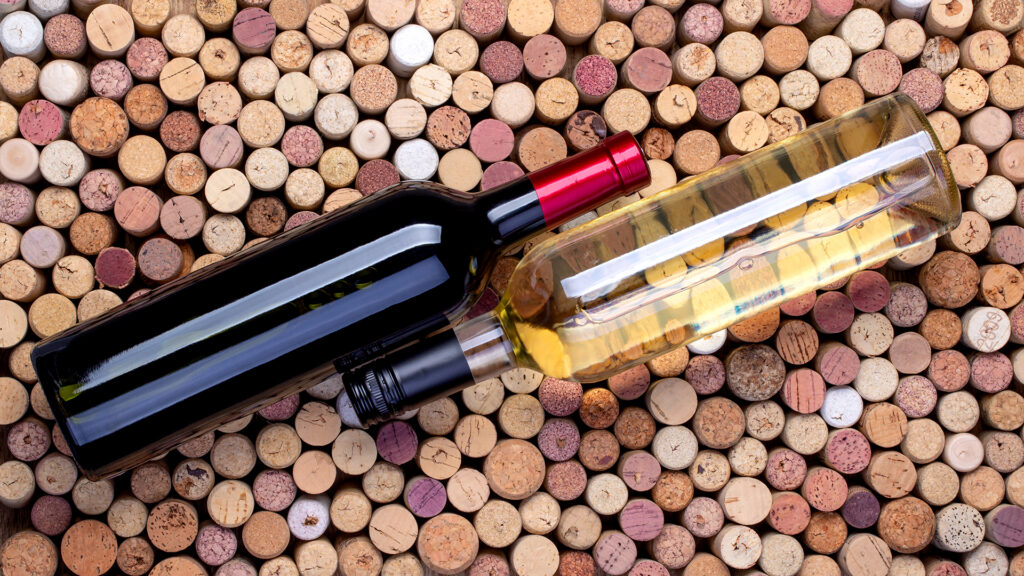
The bottle sizes start at 0.375l, often referred to as a half bottle. It is often used for dessert wines.
It is followed by the 0.75-liter bottle, which is the current global standard. To understand why it is exactly three quarters of a liter, you have to take a look back in history. We essentially owe the measure to the English, who preferred to buy wines from Bordeaux. In England, the imperial gallon was used, which held exactly 4.54609 liters. To make trade easier, it was agreed that wine should be transported in 225-liter barrique barrels. These were equivalent to around 50 gallons. To simplify the whole process on the French side, the barrique barrel contained a volume of exactly 300 bottles of 0.75 liters each. This also explains why and how the barrique barrel measure of 225 liters came about (in contrast to the 227 liter barrels from Burgundy). Incidentally, bottles with a volume of 0.75 liters are very suitable if you want to get to know a wine first – see also the next larger bottle format for comparison.
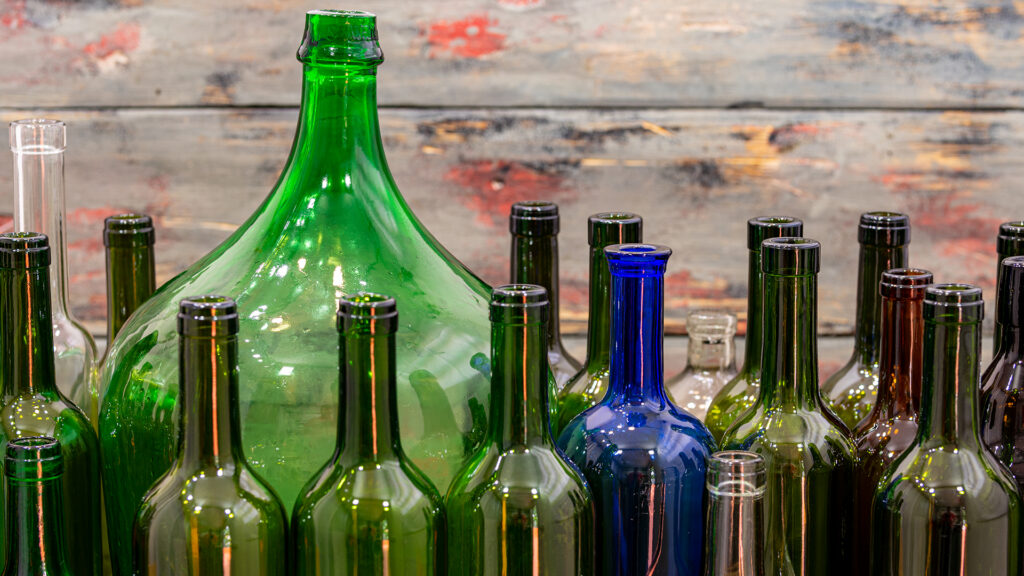
Bottles that have twice the capacity of a 0.75 l bottle are known as magnum bottles. The word magnus is derived from Latin and means “large”. Wine lovers prefer magnum bottles, as the thicker glass not only allows less light to pass through but also means they are less exposed to temperature fluctuations. This promotes slower ageing of the grape juice, making this format ideal for storing quality wines. The magnum bottle also always makes a very good representative gift.
The fact that all the following bottle sizes bear names of biblical origin without exception is not due to the divine content, but rather to the importance of the church in the production (and probably also in the consumption) of the wines.
The double magnum bottle, which holds 3 liters of wine, is called Jeroboam. The name goes back to two Israeli kings of the same name who lived and ruled around 1000 BC.
The 4.5 liter bottle, which corresponds to 6 bottles of 0.75l, is called Rehoboam. Rehoboam was once the king of Judah and, according to biblical tradition, is even said to have been the son of King Solomon.
As old as Methuselah… certainly not because the person of the same name from the Old Testament, who is said to have lived for no less than 969 years, would have regularly consumed 6 liters of wine. But the Methuselah bottle holds 8 bottles of 0.75 liters, which is exactly 6 liters.
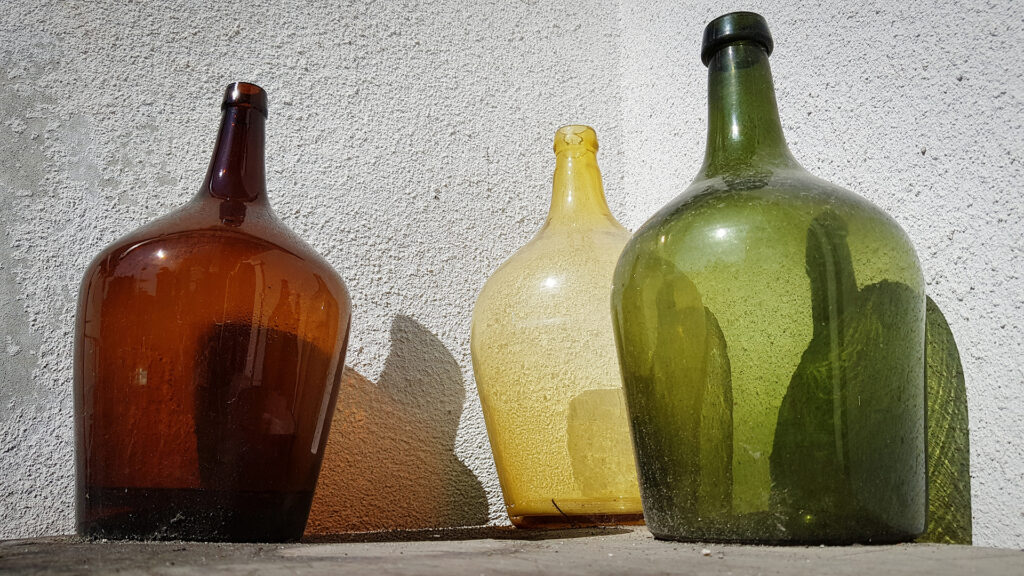
The next larger bottle size is the 9-liter bottle with the proud name Salmanazar. It holds 12 bottles of wine at 0.75 liters each and is named after five Assyrian kings.
It is followed by the Balthasar-Falsche, named after one of the famous Three Wise Men. At 12 liters, it holds no less than 16 standard 0.75-liter bottles of wine.
The 15-liter bottle is called Nebuchadnezzar. No fewer than four Babylonian kings bore this name and are venerable namesakes for this bottle, which holds the contents of no less than 20 standard 0.75 liter bottles.
The 18-liter Melchior bottle is still missing. The name goes back to the holy king of the same name. In France, Burgundy and Champagne, the term Goliath is often used for this bottle.
The standard bottle range ends with the Salomon bottle. It holds 20 liters. But this is by no means the end of the line. There are also numerous special sizes. These include the world’s largest wine bottle, which for once does not bear a biblical name but a Roman one. The Maximus bottle, and hold on tight, has a capacity of 570 liters! The average Swiss drinks 42 bottles of 0.75 liters a year. That’s just 31.5 liters of wine. The Maximus would therefore provide our average Swiss citizen with more than 18 consecutive years of uninterrupted wine enjoyment if the wine were to last that long …