


Winepairing – which wine goes with which food?
The right wine for the meal – a virtually never-ending story entitled “Winepairing”. In view of the countless books and articles that already exist on this subject, wine amateurs in particular are inclined to throw up their arms in despair at times. But that doesn’t have to be the case if you take a few principles to heart and apply them consistently when choosing the right wine.

Basically, wine and food influence each other in terms of taste perception. In the best case scenario, the two components stimulate each other so that both the food and the wine are even more enjoyable when enjoyed together than if they were consumed separately. In the worst case, on the other hand, both lose flavor because they negatively influence each other. As in a relationship, the food tends to be the partner that dominates and leads, while the wine tends to play a complementary and supportive role. This is because experience has shown that the aromas found in food, such as acidity, saltiness, sweetness or bitterness, are much stronger than those found in wine. Consequently, we cannot actually speak of a mutual influence, but rather that the food influences the wine negatively or supports it in a positive sense.
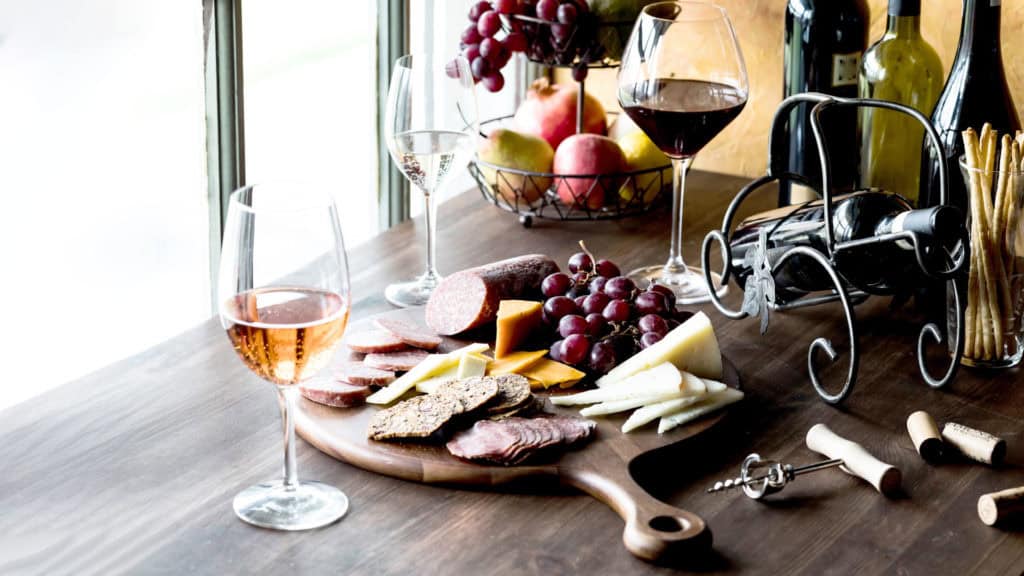
The most important rule, that the kitchen sets the tone (in terms of taste) for wine pairing, has already been mentioned. The wine is therefore always chosen to go with the food and not the other way around.
The second important insight in wine pairing is that it is not what we eat that matters, but how it was prepared. While food tastes salty, sour, sweet, umami, bitter and spicy, the flavors of wine are fruity, sweet, sour, full-bodied, tannic and alcoholic.
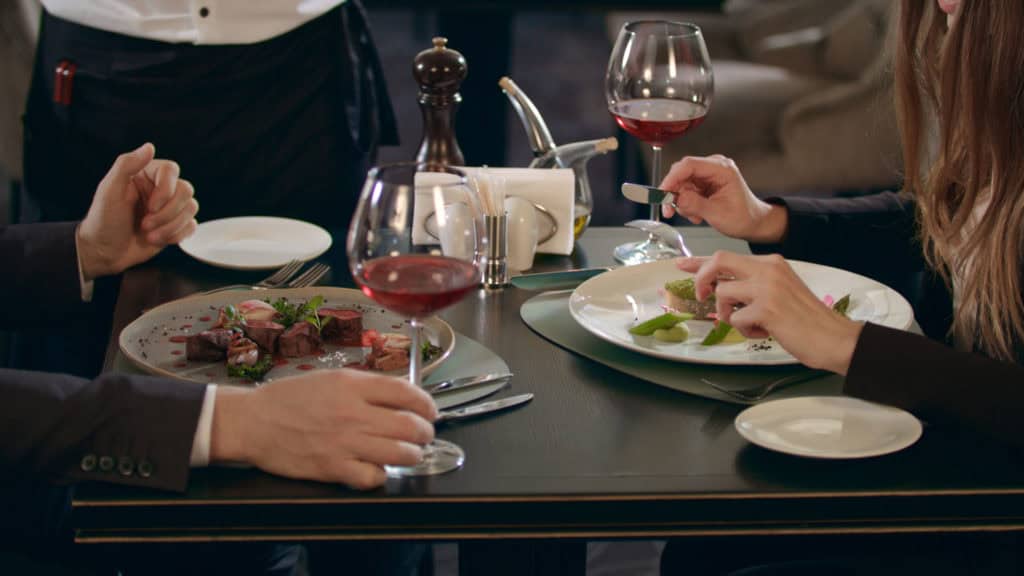
The aim of wine pairing is to combine these flavors in the best possible way. It is important to note that wine clearly prefers food with a salty and sour taste. Both flavors enhance the perception of body, sweetness and fruitiness in wine. On the other hand, salty food significantly reduces the perception of astringency (tannins), bitterness and acidity in the wine. And food with a certain acidity reduces the acidity in the wine and even emphasizes the fruitiness of the wine.

Sweetness, umami, bitterness and spiciness, on the other hand, are not necessarily a wine’s best friend. With sweet dishes, you should make absolutely sure that the wine itself is at least as sweet if not sweeter than the sweet dish, because the sweetness of a dish inevitably leads to you perceiving the body of the wine, its sweetness and the moisture in the wine to be significantly reduced. Finding the right wine for dishes with an umami taste is so difficult because umami already makes the taste complete. And if something already seems complete, it is difficult to find something that can top this sensation. Bitterness and spiciness both emphasize the structure of a wine. This means that wine can quickly be perceived as more acidic, more tannic and more bitter. Conversely, it does not mean that there is no suitable wine for sweet, bitter, spicy or umami dishes – the choice should simply be made more carefully. A classic example of this is oysters, which embody the umami taste par excellence. Next to them, even champagne seems sour. A few drops of lemon on the oysters or the shallot vinegar served in France work wonders when it comes to wine pairing.
umami
We humans differentiate between the four taste categories of sweet, sour, bitter and salty. Since the beginning of the 20th century, another taste category has been added, originating from Asia: umami. This flavor is not found in any of the four original categories and cannot be created by a combination of these four categories. Delicious, tasty and spicy are the attributes that are often used to describe the fifth flavor. It is caused by glutamate and aspartate as well as the nucleic acid ions inosinate and guanosinate. Umami is not only found in artificially produced glutamate but also in various natural foods such as cheese (especially Parmesan), beans, olives, meat, anchovies, ripe tomatoes and even breast milk.