

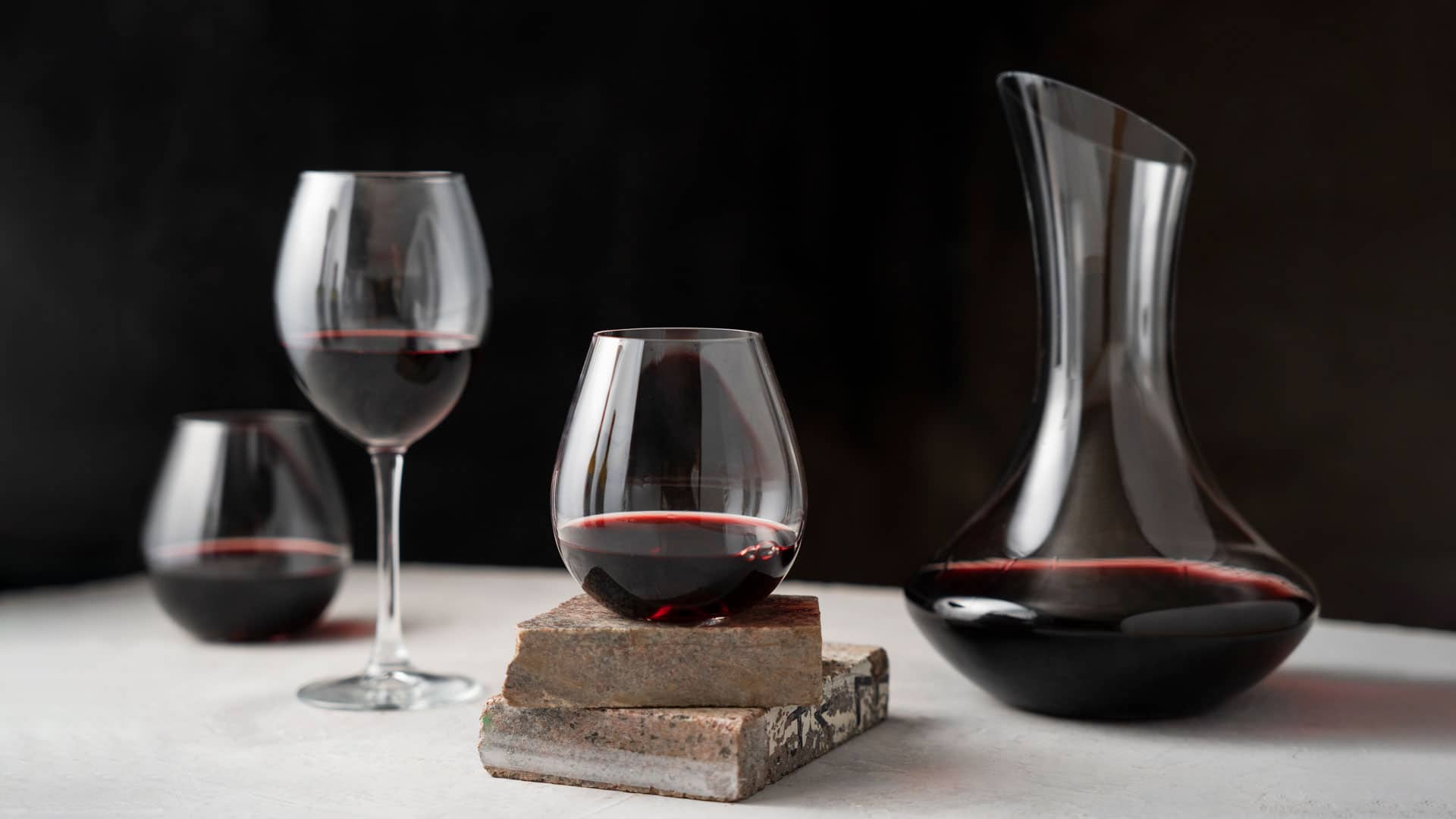
Decanting describes the process by which a wine is carefully decanted into a special vessel, the decanter or decanter carafe. This process should not be confused with simply decanting wine into a conventional carafe. A decanter is only used for serving wine.
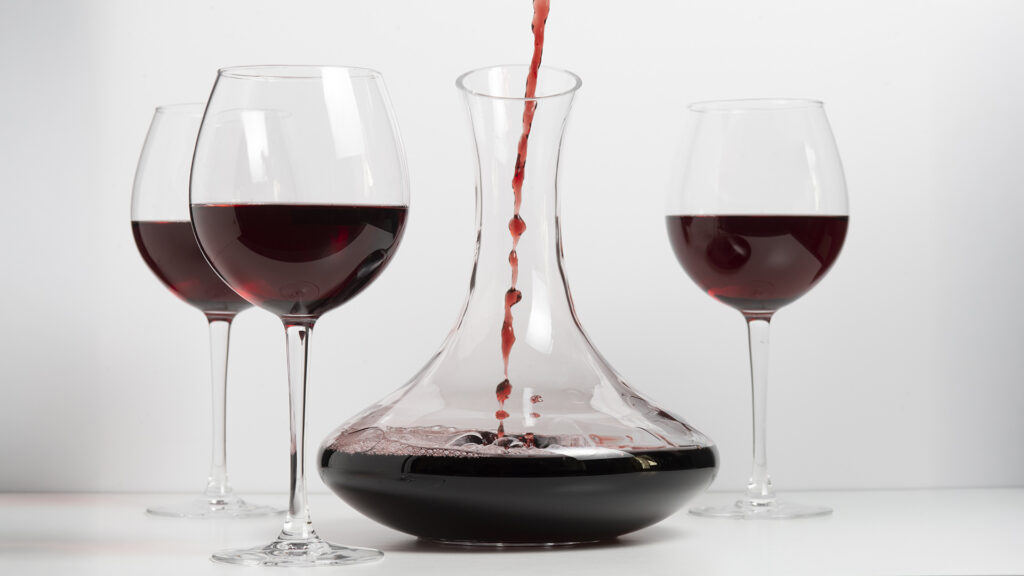
Decanting, on the other hand, has three main objectives. The first aim is to separate the wine from the sediment – also known as sediment – in order to optimize the quality of the wine. The sediment itself consists of so-called suspended matter, which settles at the bottom of the bottle over the course of time and storage. They are generally not harmful and are mainly found in red wines. However, the sediment carries the risk of impairing the taste of the wine and, last but not least, the crumbs simply don’t taste so good in the mouth.
The second aim of decanting is to maximize the surface area of the wine that comes into contact with oxygen. This form of aeration, also known as letting the wine breathe, contributes to an improvement in taste, making the tannins in the wine more accessible. Last but not least, decanting also promotes the development of flavors and aromas.
A third advantage of decanting, which should not be underestimated, is that decanting offers the chance to save the wine in the event of a potentially damaged cork. If parts of the cork accidentally get into the wine when opening the bottle, the decanter can be used to separate the wine from the cork residue.
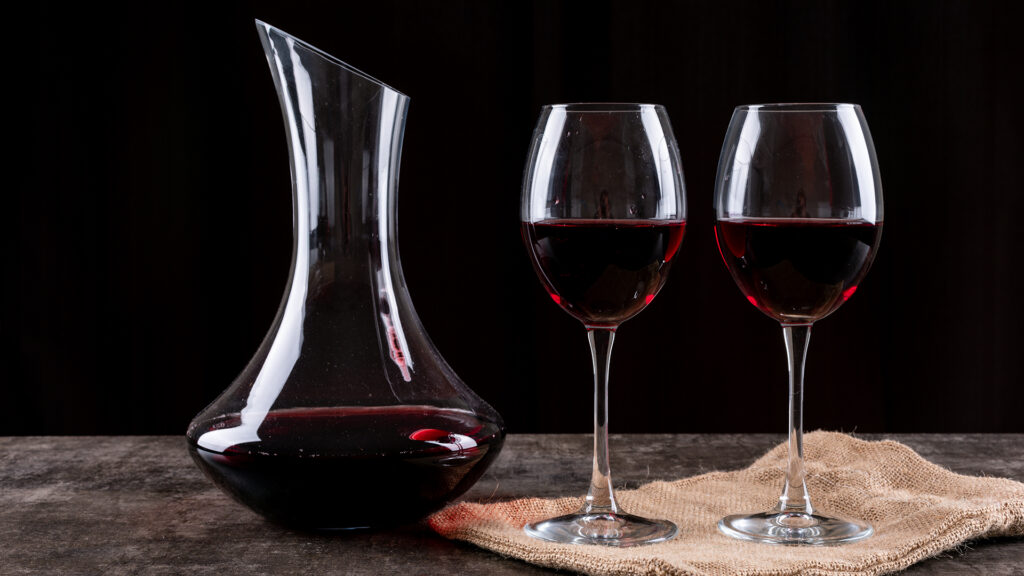
It used to be thought that only red wines, preferably older vintages, should be decanted. This myth is now long outdated and we know that it is worth bringing almost any wine into contact with oxygen. However, decanting is particularly beneficial for young and powerful red wines with intense tannins. There are no general guidelines as to how long the wine should remain in the decanter. Just 15 to 30 minutes is very beneficial for the development of the wine, but up to several hours can be useful for heavy wines or wines that are still sealed.