

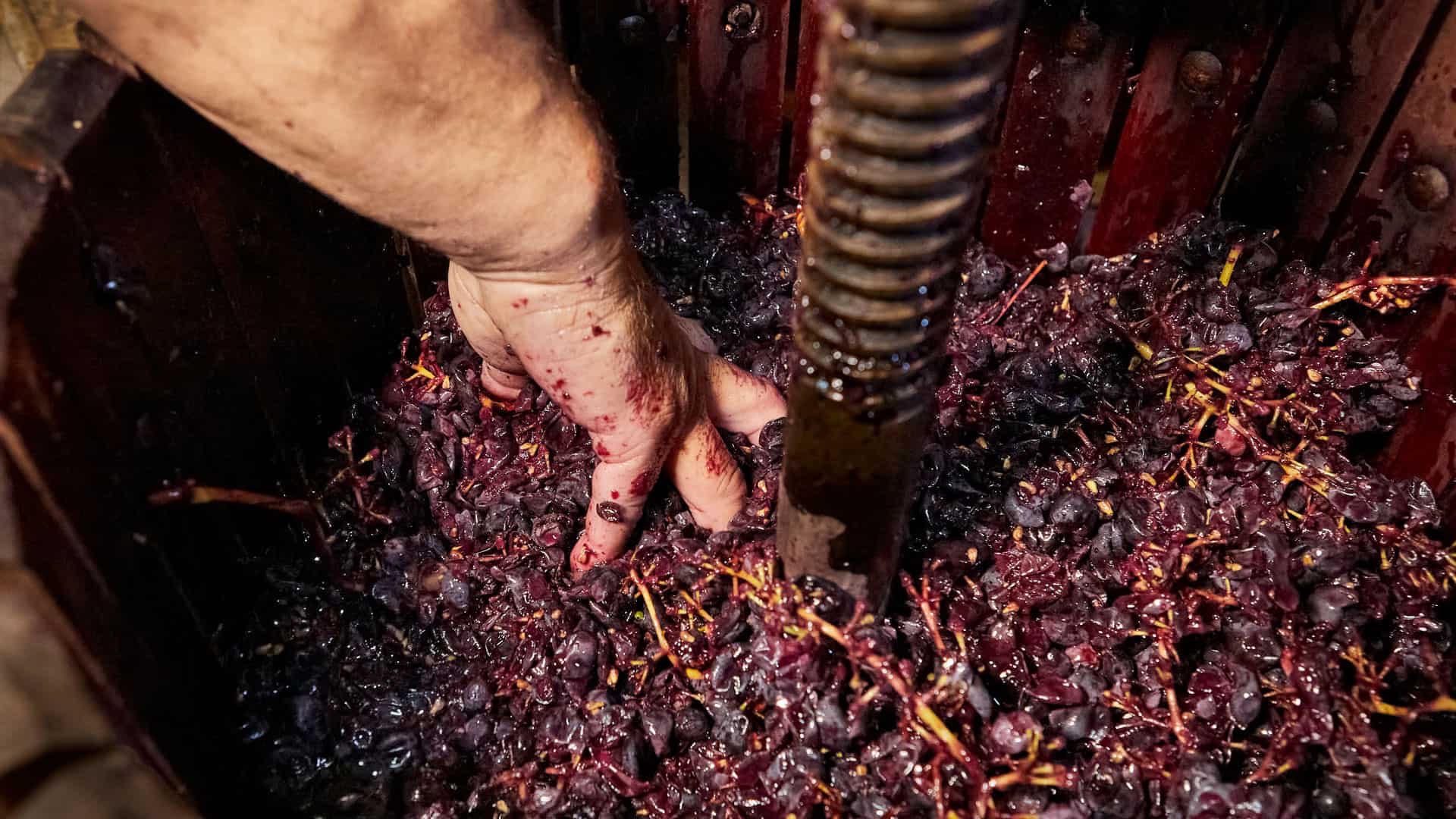
Mash is the term used to describe the mixture of must, berry skins and seeds. If the grapes have not been destemmed, i.e. their stems and stalks have not yet been removed, these two are also included in the mash.
Mash fermentation is the oldest and most widely used method of making red wine in the world. In contrast to the production of classic white wine, in which the grapes are pressed (in southern countries, the grapes are still traditionally crushed with bare feet in the vat to gently break them up) and the juice obtained is fermented, the juice of the red wine grapes remains in a container together with the berry skins and seeds. This is known as mash fermentation, during which the crushed fruit skins release a maximum amount of their red coloring through the resulting alcohol (the fruit sugar is converted into alcohol) and released into the grape juice. Mash fermentation also has the effect that the fermentation of the grape skins has a lasting influence on the taste of the future wine. The skin of the grapes and also the seeds contain tannins such as tannin. The red wine owes its later, typical taste to this. The tannins also have an antioxidant effect, i.e. they prevent the wine from ageing, which means that red wines can generally be stored for much longer than white wines.
As significantly more vineyard yeasts enter the mash with the grape skins, the question of so-called pure or spontaneous fermentation is less important for red wine. This is because the proportion of vineyard yeasts contained in the grape skins is generally sufficient to ensure a good fermentation process.
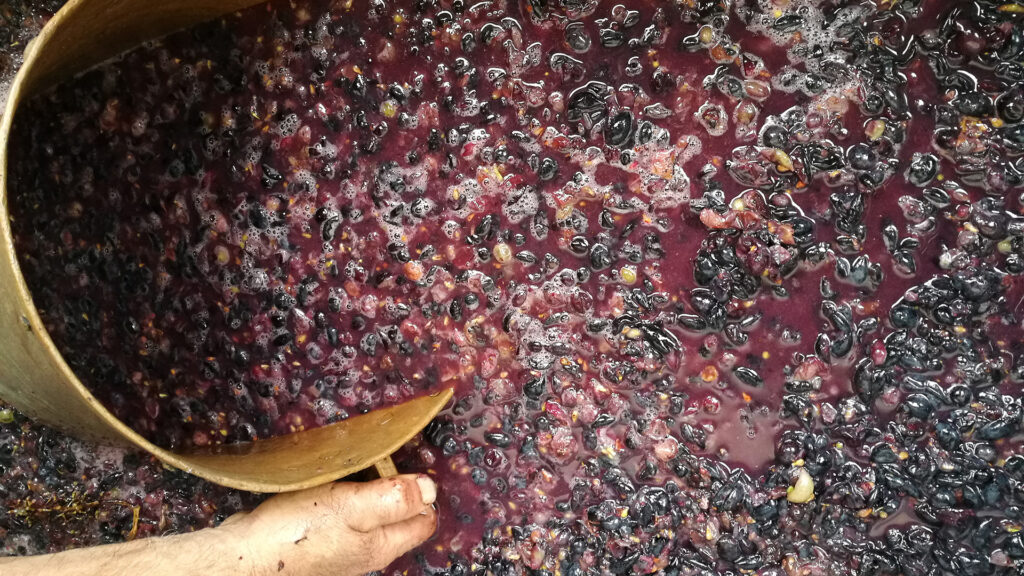
Compared to the must fermentation of white wine, mash fermentation is usually much faster. If the wine is left on the skins for too long (maceration time), this would have the unpleasant consequence of hard tannins entering the skins. It is important to know that the temperature is more important than the duration of the mash fermentation. This must be perfect if the final red wine is to boast a balanced tannin structure.
As the color of the wine suggests, rosé wine has a significantly shorter maceration time than red wine. Fewer colorants are released into the must, as the red mash is pressed earlier and further fermentation is then carried out as must fermentation, as with white wine.