

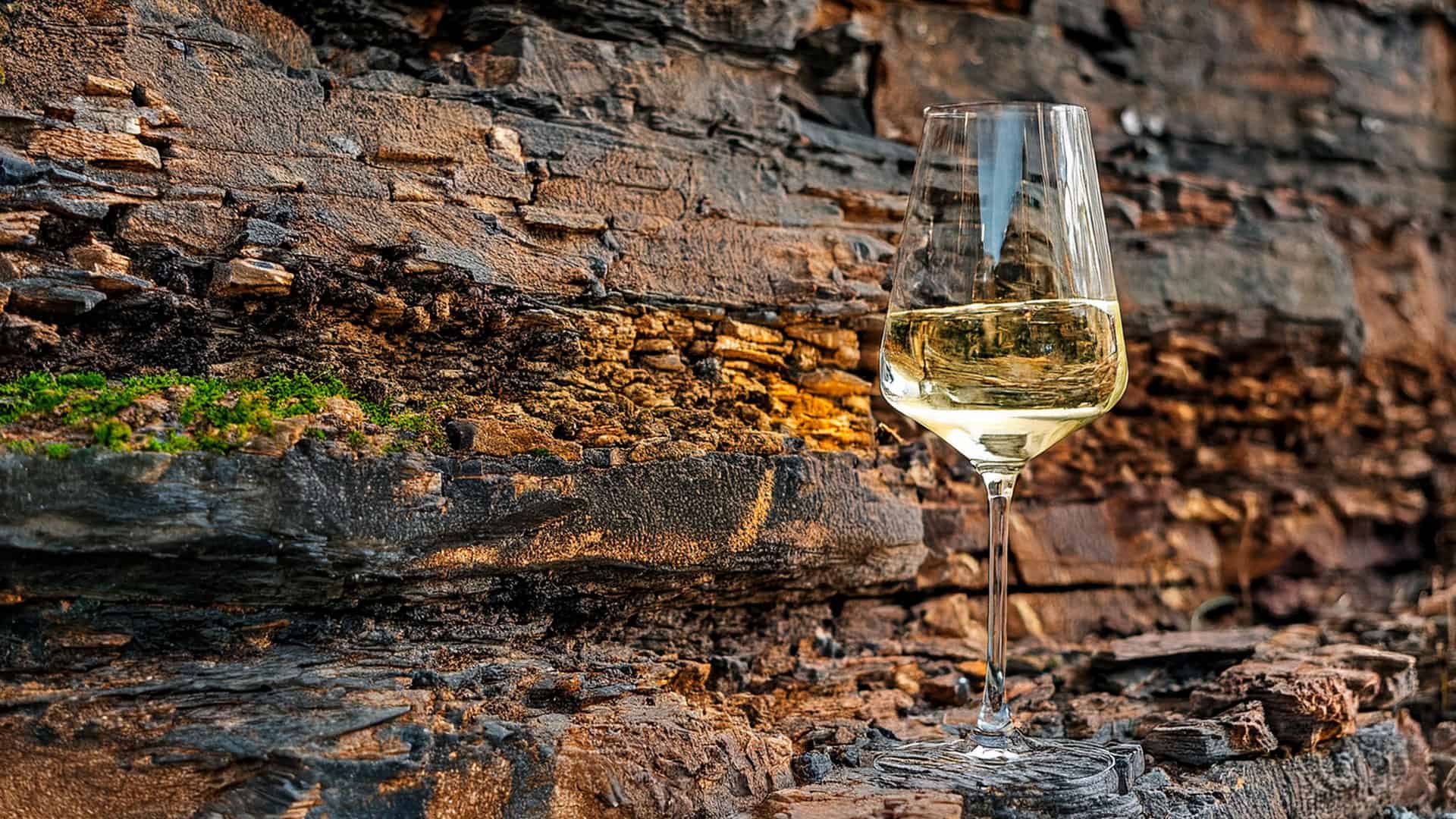
Wines are described as mineral if they have a characteristic mouthfeel or taste reminiscent of minerals.
There is probably no other term in the world of wine and its taste definition that is currently as hotly debated as “mineral”. And there doesn’t seem to be any gray area between the supporters and detractors. The term minerality is problematic in itself, because according to the Duden dictionary, this word does not even exist in the German language. Rather, it was probably borrowed from the English word “minerality”. And the fact that a wine thrives on stony soil is by no means a guarantee that it is a mineral wine. After all, there are wines that grow on clay soils that are significantly more mineral. So the saying “stone becomes wine” cannot be left standing.
But where and how is there a plausible explanation for this phenomenon, which is often used to describe the taste of a wine alongside sweetness, acidity, alcohol and fruit aromas? Let’s be clear: there is neither a uniform definition nor a scientific consensus on what exactly is meant by minerality. It remains a highly individual term.
Of course, it is often assumed that minerality is due to the influence of the soil in which the vines grow. The roots of the vines absorb minerals from the soil and some of these minerals can be reflected in the wine. Although these are present in such small quantities in the wine that they are hardly noticeable in terms of taste. Certain soil types, such as calcareous or slate soils, are also often associated with a higher likelihood of mineral notes in the wine.
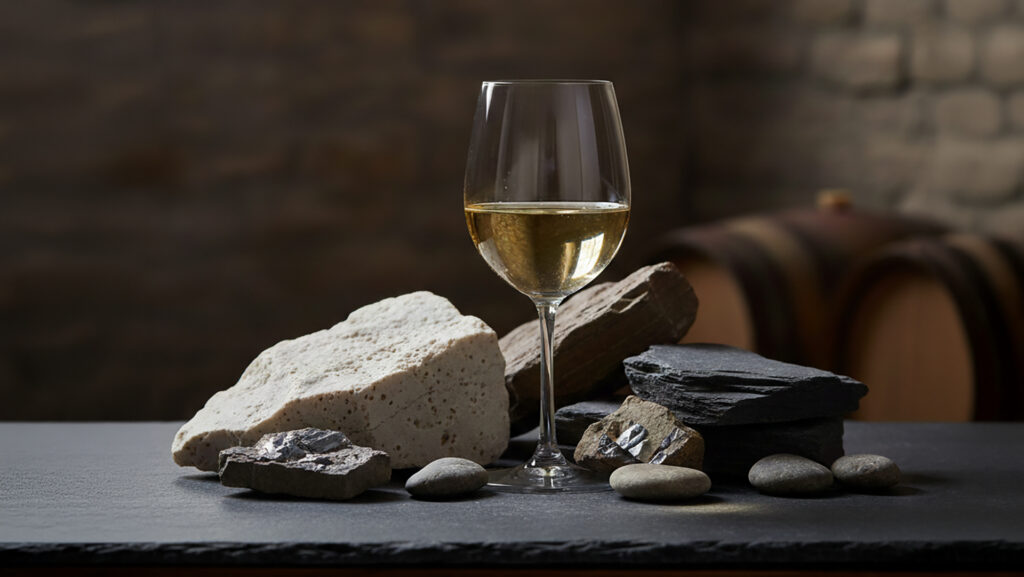
However, it is important to note that the exact cause of mineral aromas in wine is not fully understood. Some studies suggest that they do not originate directly from the soil, but may result from complex chemical reactions during the winemaking process. It is also thought that yeast and microorganisms may play a role in the development of mineral aromas during fermentation. This seems to be the most plausible approach to explaining the concept of minerality. This is all the more true when we know that minerals are odorless – without exception. In addition, palatable minerality is actually only the certain saltiness that is attributed to many wines that are described as mineral.
It is therefore important to note that the term “minerality” is subjective and is perceived differently from person to person. A wine that is perceived as mineral by one person may not convey the same perception to another. Minerality in wine is therefore more a description of a particular sensory experience than an objectively measurable characteristic.