


It is the ambivalent mold with the uncharming Greek name Botrytis cinerea that makes the eyes of wine lovers and winegrowers light up. The flip side of the coin, namely when the mold appears too early, can also mean the destruction of the vine stock and then leads to the winegrower tearing his hair out. In this case, we speak of raw or sour rot, which makes the grapes and the must sour and undrinkable.
Mildew, also known as gray mould and gray rot, or with a positive connotation, noble rot and noble fungus, is basically a vine disease. It was already described in the 18th century and only occurs in a few climatic zones in the world that meet special climatic requirements, including Valais. The fungus is a tubular fungus and spreads vegetatively via the so-called conidia (spore form).
Noble rot forms on ripe grapes in warm fall weather when they have reached at least 60, but usually around 80 degrees Oechsle. At this time of year, the necessary moisture is usually provided by early morning fog. It is important that the days are still warm enough to ensure the drying process of the berries during the course of the day.
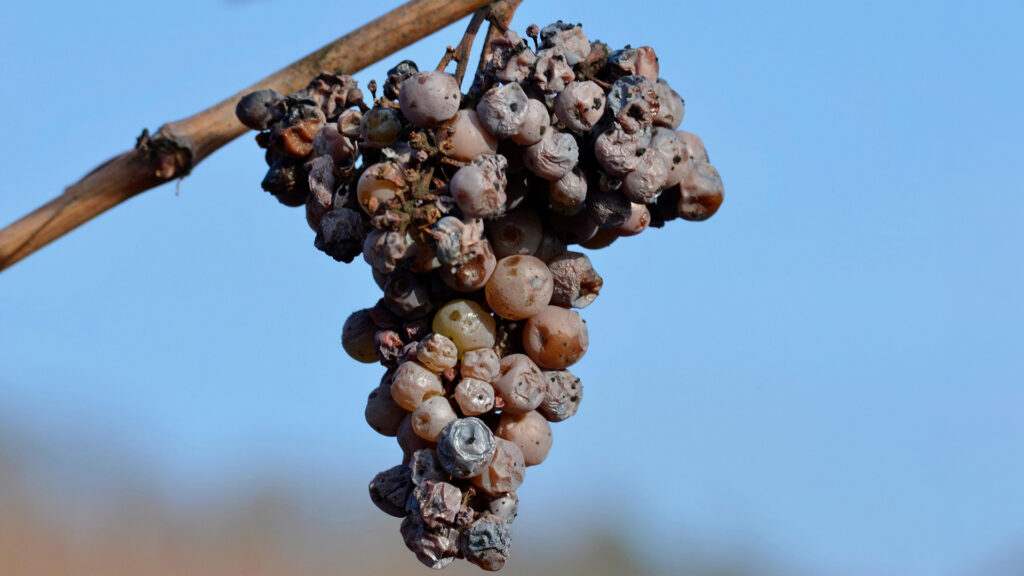
When the mold appears, small brown spots form on the surface. This is an indication that the grapes are being perforated by the enzymes of the fungus. This breaks down the cell walls of the grape skin. As a result, the moisture can escape from the berries and evaporate and the concentration of the ingredients in the berry juice increases. This process also leads to a change in the aroma, which tends towards honey and is also remotely reminiscent of fungus in nuances, which is why it is often referred to as botrytis tone.
Even when ideal weather conditions prevail, not all grapes on a vine are affected by noble rot. As a result, the berries usually have to be harvested by hand in several passes, which requires a lot of work. In addition, the yield is relatively low, which explains, among other things, the higher prices for wines made from noble rotten grapes. Wines made from noble sweet grapes are not only characterized by their particularly sweet taste, but also have a very long shelf life and can usually be stored for decades.